New research shows that gaps continue to widen between student interest and industry demand
[29 October 2026] New research shows that employer demand is outpacing student interest in some of the largest and most important fields of study.
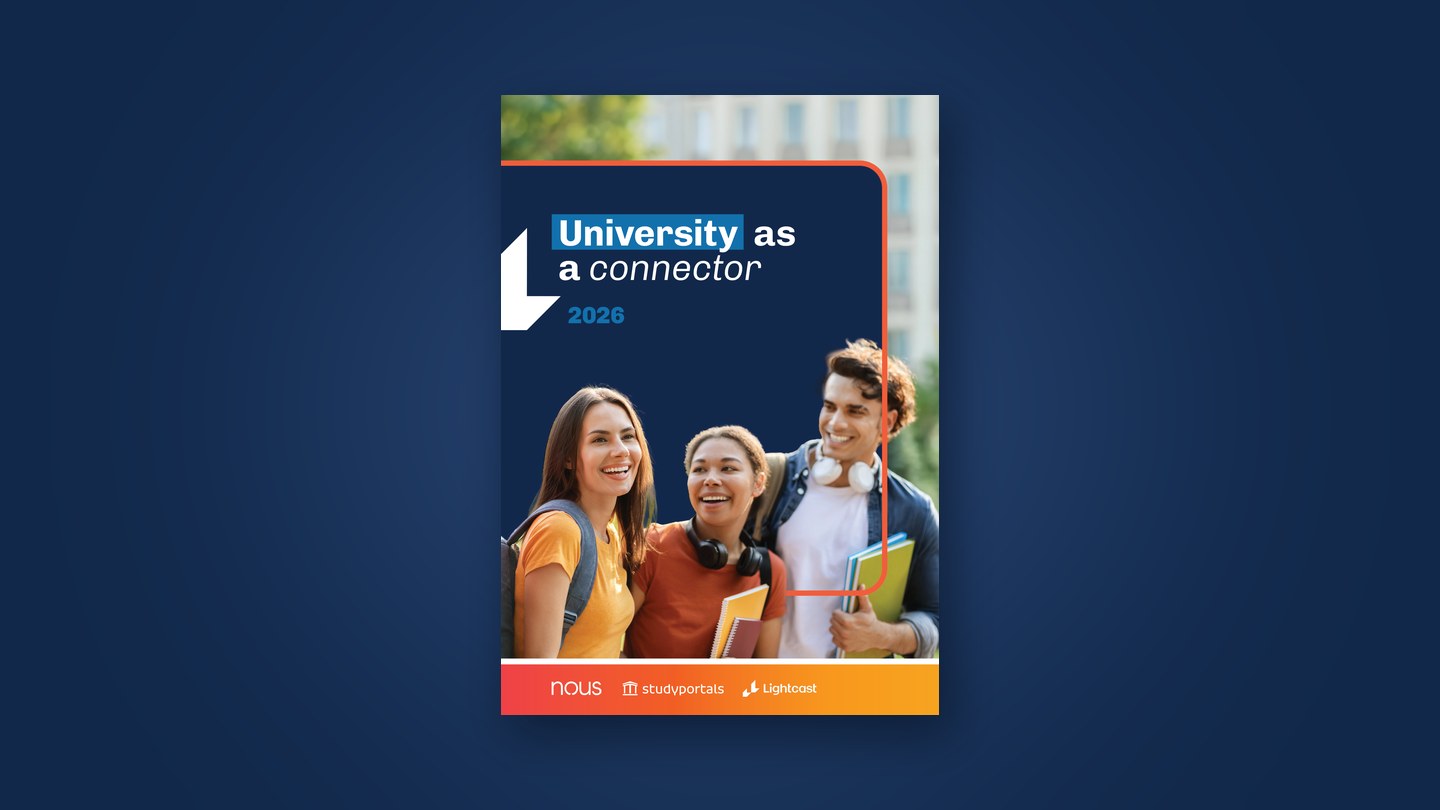
The latest University as a Connector report, produced by Nous Group and Studyportals, compares employer demand and prospective student interest across Australia, Canada, the United Kingdom, and the United States. It finds that gaps in several major workforce pipelines widened between 2022 and 2025.
Across several major fields, including business, engineering, nursing and health sciences, employer demand has continued to grow while student interest has failed to keep pace in many markets. Because these are high-volume fields, even modest shifts can translate into significant workforce shortfalls.
Nous Group Global Higher Education Lead Zac Ashkanasy said the findings showed that universities could not rely on current student demand alone to guide future course offerings and investment.
“Universities face difficult choices about where to grow, where to protect capacity, and where to reshape their programs,” Mr Ashkanasy said. “Those decisions need to be informed by where workforce demand is heading, not only by what prospective students want to study today.”
“The most concerning gaps are appearing in fields that are central to national capability.”
The analysis reveals contrasting patterns across the four countries. The United Kingdom shows the strongest overall alignment, particularly in engineering, education and health sciences, where employer demand and student interest have grown together. Australia remains relatively well aligned overall, although employer demand grew in business and health sciences between 2022 and 2025 as student interest declined. The United States has significant gaps in nursing, accounting, finance and engineering, with the largest widening occurring in health sciences and nursing. Canada recorded broad growth in employer demand, while student interest in engineering and business declined as employer demand increased.
The data gives universities a clearer picture of where student interest, university offer and employer needs are misaligned,” said Studyportals CEO and Co-Founder Edwin van Rest.
“Taking a holistic and data-driven approach can be a guaranteed path to become more aligned, which really is a win-win-win situation. Students win; employers win. By having the right talent, students win through matching jobs and ultimately universities win because they are elevating their impact. This is not only a way to run universities better but can also be a new source of social license: the talent impact a university has on its ecosystem and the wider labour market, needs, and competitiveness of society.”
The report also finds that artificial intelligence is changing the skills required across almost every discipline. Employers increasingly expect AI capability in even fields not suffering from lower student interest.
The report calls on universities to:
- consider how they generate student interest in large fields where employer demand is growing faster;
- build stronger industry partnerships and employment pathways;
- use labour-market, student-demand and graduate-outcomes data to guide course portfolios and recruitment;
- embed AI literacy, data capability, and durable human skills across the curriculum; and
- look beyond enrolment to how graduates move into employment.
Professor Aleks Subic Vice-Chancellor and CEO of Torrens University in Australia said, “Behind these widening gaps are students who cannot see a clear pathway to a rewarding career, and employers struggling to find the capabilities they need. Universities have a responsibility to bring those two worlds closer together. That means working with industry and government to shape courses, create meaningful work experience and open more flexible pathways into areas of workforce need, including recognising capabilities gained through work and prior learning.”
The updated report builds on the original 2023 University as a connector paper, which argued that universities could create greater value for students, employers, and communities by connecting student demand more closely with workforce need. This situation has not changed but has in fact become more pronounced.
For media enquiries, interviews and further information
| Studyportals
Cara Skikne +31 684 847508 caraskikne@studyportals.com |
Nous Group
Nathalie Swainston +61 419 489 034 |