Why 40% of universities are diversifying markets right now

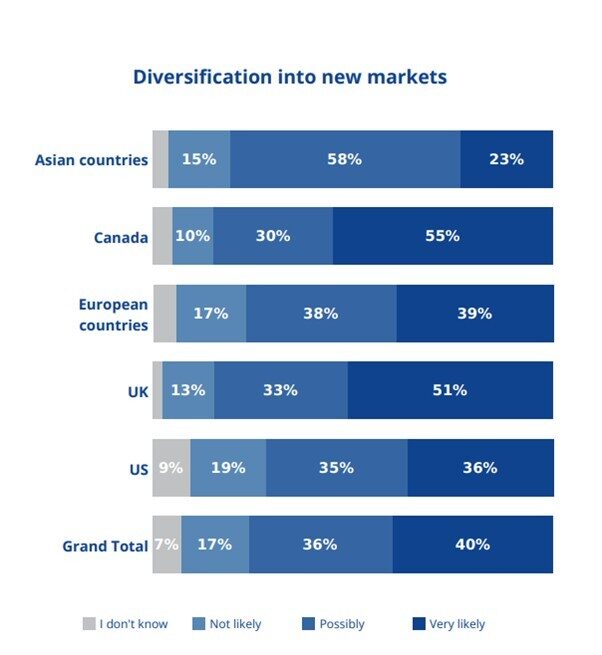
40% of universities worldwide are rebuilding their recruitment strategies. The data shows what’s driving the shift, where they’re going, and what’s actually working.
When one market collapses, everything can collapse
Survey responses revealed the risk of relying on one or two countries. One US university lost every student from a region that used to represent 40% of their total enrolment. Another reported a “major drop” in Indian graduate numbers.
This is what concentration risk looks like: a policy shift can wipe out your entire pipeline in a single year.
The numbers tell you who’s diversifying
Some of the hardest-hit regions are moving the fastest.
Where universities are actually going
Survey responses named the same regions repeatedly: Sub-Saharan Africa (Nigeria, Ghana, Kenya), Southeast Asia (Vietnam, Thailand, Indonesia), Latin America, and Gulf countries.
The students are still out there. They’re just coming from different places now.
Meanwhile, traditional pipelines are drying up. US institutions reported declining Indian postgraduate numbers. UK universities noted dropping Chinese demand. European institutions saw their EEA recruitment fall.
The problem: diversify with less money
60% of Canadian institutions expect budget cuts next year. 28% of US institutions. They need to find new markets with smaller teams and tighter budgets.
One European institution summed it up: “We are forced to shift focus. But with limited resources, it’s difficult to start from scratch.”
What’s working: emerging markets, regional focus, online programmes
Institutions reporting growth mentioned similar approaches: shifting recruitment to emerging markets, targeting specific high-growth regions, and expanding online programmes (26% of US universities are doing this).
None of it’s revolutionary. It’s practical choices instead of waiting for old markets to recover.
The pattern holds across regions: when visa restrictions make traditional recruitment harder, universities look elsewhere. Policy pressure doesn’t just reduce enrolment. It forces institutions to rebuild their entire strategy.